Posted on 16th Nov 2026
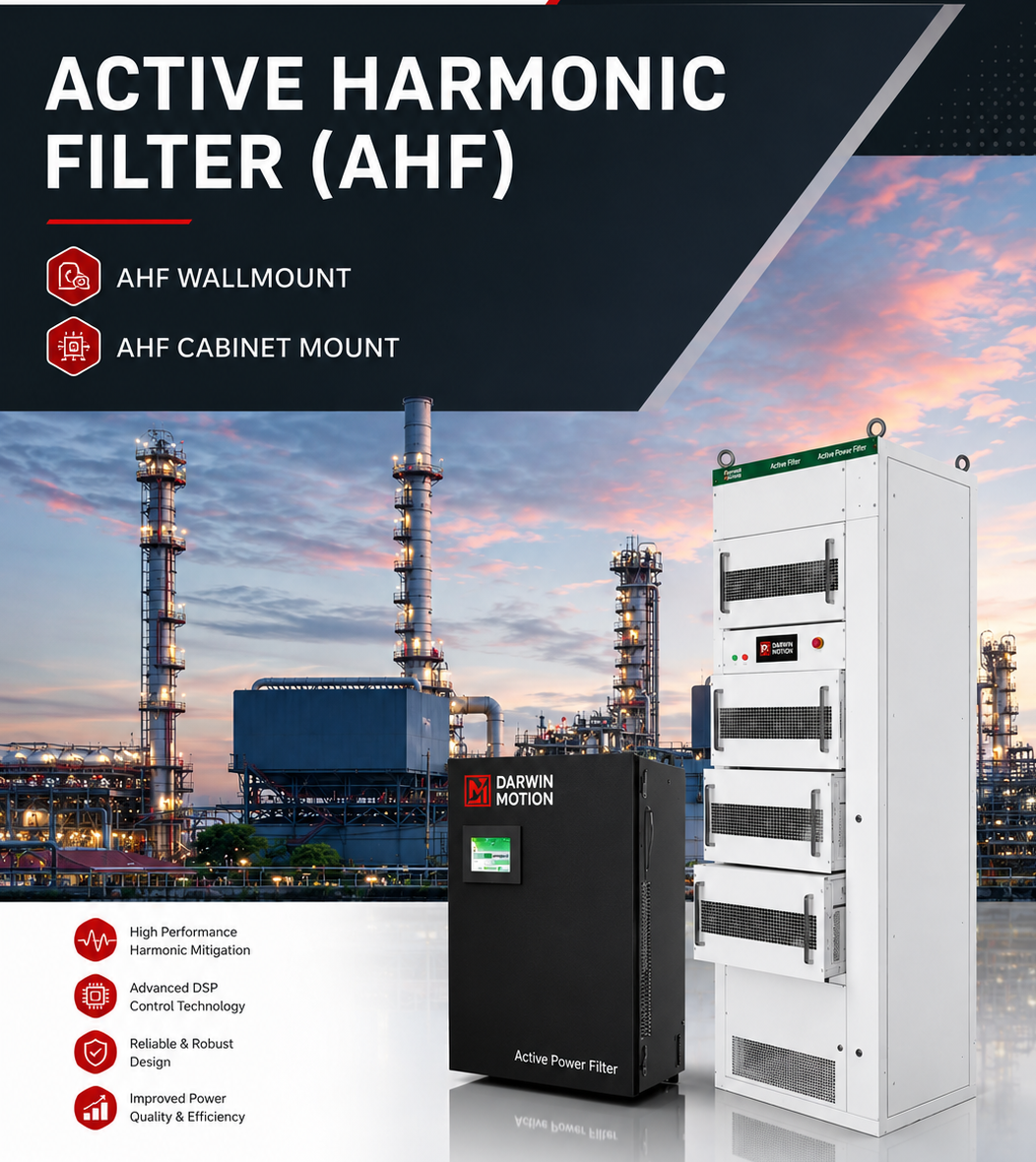
Modern industrial facilities depend on sophisticated electrical equipment to maintain productivity, operational efficiency, and consistent manufacturing output. Variable Frequency Drives (VFDs), industrial automation systems, UPS units, rectifiers, welding equipment, and other nonlinear loads play an essential role in industrial operations. However, these devices can introduce harmonic distortion into electrical distribution networks, potentially affecting power quality and equipment performance.
Harmonic distortion can contribute to transformer overheating, excessive neutral currents, capacitor failures, unexpected circuit breaker tripping, and increased electrical losses. To address these challenges, industries increasingly adopt advanced power quality solutions such as an Active Harmonic Filter.
However, selecting the right filter requires more than simply choosing equipment based on its current rating. Industries must evaluate their electrical infrastructure, harmonic levels, connected loads, operating conditions, and future expansion requirements.
In this guide, we will explore the important factors industries should consider when selecting an Active Harmonic Filter and how Darwin Motion, an experienced Darwin Motion AC Drive manufacturer, supports industrial power quality and automation requirements.
An Active Harmonic Filter (AHF) is an advanced power electronic device designed to reduce harmonic currents generated by nonlinear electrical loads. It continuously monitors the electrical system, identifies harmonic components, and injects compensating currents to counteract unwanted harmonics.
Unlike conventional passive filters, which use fixed combinations of inductors and capacitors, active filters dynamically respond to changing load conditions. This makes them particularly useful in industrial facilities where electrical loads frequently change throughout the production cycle.
The working principle of an Active Harmonic Filter involves the following steps:
This dynamic compensation process helps improve current waveform quality and reduces harmonic distortion in the electrical distribution system.
Every industrial installation has different electrical characteristics. A manufacturing plant operating multiple VFDs may have different harmonic requirements compared to a facility running large UPS systems, robotic equipment, or automated production lines.
Selecting an incorrectly rated filter may result in insufficient harmonic compensation, unnecessary investment, or limited performance during peak operating conditions.
The first step in selecting an Active Harmonic Filter is understanding the existing harmonic distortion in the electrical network. Industries should conduct a power quality assessment using suitable power quality analyzers.
The assessment should identify the magnitude and distribution of harmonic currents under different operating conditions.
A comprehensive harmonic analysis helps engineers determine the actual compensation requirements instead of relying on assumptions based only on equipment ratings.
Filter capacity is one of the most important considerations during selection. An Active Harmonic Filter is generally rated according to its harmonic compensation current in amperes rather than simply the connected load's kW or kVA rating.
Engineers should calculate the harmonic current that needs to be compensated based on measured electrical parameters and the desired harmonic performance.
A simplified preliminary estimation for harmonic compensation is:
Estimated Harmonic Current = Fundamental Current × THDi
For example, if a system has a fundamental current of 500 A and a THDi of 30%, the approximate harmonic current is:
500 × 0.30 = 150 A
This provides an initial estimate of the harmonic current. The final filter rating must be determined through a detailed harmonic assessment, considering individual harmonic orders, operating conditions, compensation objectives, and additional reactive current requirements.
Different nonlinear loads generate different harmonic characteristics. Understanding the connected equipment is essential for selecting a suitable filter configuration.
Common industrial harmonic-producing equipment includes:
The selected filter should be suitable for the actual load characteristics and the expected variation in harmonic demand.
Before selecting a filter, industries must verify that its electrical specifications are compatible with the existing distribution network.
Important electrical considerations include:
For installations with significant neutral current or triplen harmonics, a suitable three-phase four-wire filtering arrangement may be necessary. The selected configuration should match the electrical system design.
Not all industrial harmonic problems involve the same harmonic orders. Some installations experience predominantly 5th and 7th harmonics, while others may contain higher-order harmonic components.
Therefore, industries should verify the harmonic compensation range supported by the filter before making a selection.
Consider the following:
A suitable compensation range helps ensure that the filter addresses the actual harmonic characteristics of the installation.
The installation location significantly influences how an Active Harmonic Filter performs within an electrical distribution network.
There are two commonly considered installation approaches:
In centralized installations, the filter is connected to the main distribution panel or a common electrical bus. It compensates for harmonic currents generated by multiple connected loads.
This arrangement can be suitable for industrial facilities where several harmonic-producing machines operate within a common distribution network.
In this approach, the filter is installed near a specific machine or group of equipment that generates significant harmonic distortion.
It can be useful when a particular production line or machine contributes substantially to the facility's overall harmonic problem.
The choice between centralized and individual-load filtering should depend on the electrical network layout, harmonic measurements, and compensation objectives.
Industrial facilities frequently expand their production capacity by installing additional motors, VFDs, automation systems, and manufacturing equipment.
Therefore, filter selection should consider future electrical requirements alongside current harmonic compensation needs.
Industries should evaluate:
A scalable solution can help reduce the need for complete system replacement when industrial power requirements increase.
Both active and passive harmonic filters are used to address harmonic distortion. However, their working principles and application suitability differ.
| Parameter | Active Harmonic Filter | Passive Harmonic Filter |
|---|---|---|
| Operating Principle | Uses power electronic converters to inject compensating current. | Uses passive electrical components to provide harmonic filtering paths. |
| Load Variation | Can dynamically respond to changing harmonic loads. | Generally designed for specific harmonic frequencies and operating conditions. |
| Harmonic Compensation | Can compensate multiple harmonic orders within its specified range. | Typically targets selected harmonic frequencies. |
| System Flexibility | Offers flexible compensation for changing load conditions. | Less adaptable to substantial changes in load characteristics. |
| Application | Suitable for facilities with dynamic nonlinear loads. | Suitable for applications with predictable harmonic characteristics. |
The appropriate solution depends on the harmonic profile, electrical network configuration, budget, and performance requirements of the facility.
Choosing an appropriately designed Active Harmonic Filter can deliver several operational and electrical benefits for industrial facilities.
By compensating unwanted harmonic currents, active filters help improve current waveform quality and reduce harmonic distortion within the electrical network.
Harmonic currents can increase heating in transformers, cables, motors, and other electrical components. Reducing harmonic currents can help minimize these additional losses and thermal stress.
Excessive harmonic distortion can interfere with sensitive electronic equipment and contribute to operational problems. Effective harmonic compensation helps create a more stable electrical environment.
Reducing unnecessary harmonic currents can help lower associated electrical losses and improve the utilization of existing electrical infrastructure.
Industrial facilities may need to meet specific harmonic distortion requirements at their point of common coupling (PCC). An appropriately selected filter can support these objectives when designed and verified against actual network conditions.
IEEE 519-2022 is an important reference for harmonic control in electrical power systems. It establishes recommended practices and requirements for voltage and current distortion at the point of common coupling (PCC).
Industries should understand that harmonic limits depend on system characteristics, including the relationship between short-circuit current and maximum demand load current. Compliance must therefore be evaluated at the applicable PCC rather than assuming that a particular THDi value at an individual machine guarantees compliance.
When selecting an Active Harmonic Filter, engineers should consider:
A detailed power quality study helps determine whether the proposed filtering solution can achieve the required harmonic performance.
Active Harmonic Filters are useful across several industrial sectors where nonlinear electrical loads are widely used.
Manufacturing facilities use VFDs, automated production lines, CNC machines, and other electronic equipment that can generate harmonic currents.
Automotive manufacturing plants use robotic systems, welding equipment, motor drives, and automated assembly lines. Harmonic compensation can help improve the electrical environment for these operations.
Textile manufacturing involves numerous motor-driven machines, spinning systems, compressors, and production equipment. Active filtering can help address harmonic problems caused by variable-speed machinery.
Large HVAC installations use variable-speed compressors, pumps, fans, and other electronic equipment. These loads can contribute to harmonic distortion in distribution networks.
Water treatment plants frequently use multiple motor-driven pumps and VFD-based control systems. An appropriate filtering solution can support better power quality across these installations.
Even a technically advanced filtering system may deliver unsatisfactory results if the selection process overlooks important electrical parameters.
Industries should avoid the following mistakes:
Selecting the right power quality equipment requires an understanding of industrial electrical systems, motor control applications, and automation requirements.
Darwin Motion AC Drive manufacturer focuses on industrial drive and power electronics solutions designed to address modern industrial requirements. With applications spanning motor control, power quality, and industrial automation, Darwin Motion provides solutions for facilities looking to improve their electrical system performance.
When evaluating harmonic mitigation requirements, industries should consider solutions that align with their connected loads, electrical infrastructure, and operating conditions.
Darwin Motion's industrial product portfolio and application-oriented approach make it a relevant technology partner for businesses exploring power quality improvement and industrial electrical solutions.
To learn more about harmonic filtering solutions, visit the Active Harmonic Filter page on the Darwin Motion website.
Selecting the right Active Harmonic Filter is an important step toward improving industrial power quality and maintaining reliable electrical operations. Factors such as harmonic analysis, compensation current, connected load characteristics, voltage configuration, installation location, and future expansion requirements should all be considered before finalizing a filtering solution.
Rather than choosing a filter based only on equipment capacity, industries should conduct a detailed power quality assessment and select a solution that addresses their actual harmonic compensation requirements.
With growing dependence on VFDs, automation systems, and power electronic equipment, effective harmonic management is becoming increasingly important. By exploring suitable power quality solutions from Darwin Motion AC Drive manufacturer, industries can take a practical step toward more reliable and efficient electrical operations.
An Active Harmonic Filter is a power electronic device that detects harmonic currents and injects compensating currents to reduce harmonic distortion in an electrical distribution system.
Filter capacity should be selected based on measured harmonic current, load conditions, harmonic spectrum, compensation objectives, and future expansion requirements.
Yes. An appropriately designed Active Harmonic Filter can compensate harmonic currents generated by multiple VFDs connected to a common electrical distribution network.
THDi represents Total Harmonic Distortion of Current, while THDv represents Total Harmonic Distortion of Voltage. Both parameters are important when evaluating electrical power quality.
An Active Harmonic Filter can be installed at the main distribution panel for centralized compensation or near specific harmonic-producing equipment for individual-load compensation. The best location depends on the electrical network and harmonic assessment.
Many active harmonic filters offer reactive power compensation in addition to harmonic mitigation. However, the available functionality depends on the filter design and its configured operating mode.
Manufacturing, automotive, textile, HVAC, water treatment, and other industries using nonlinear electrical loads can benefit from appropriately selected active harmonic filtering solutions.
Harmonic analysis identifies the actual distortion levels, individual harmonic orders, load variations, and compensation requirements. It helps engineers select an appropriately rated filtering solution.


