Posted on 21st Nov 2026
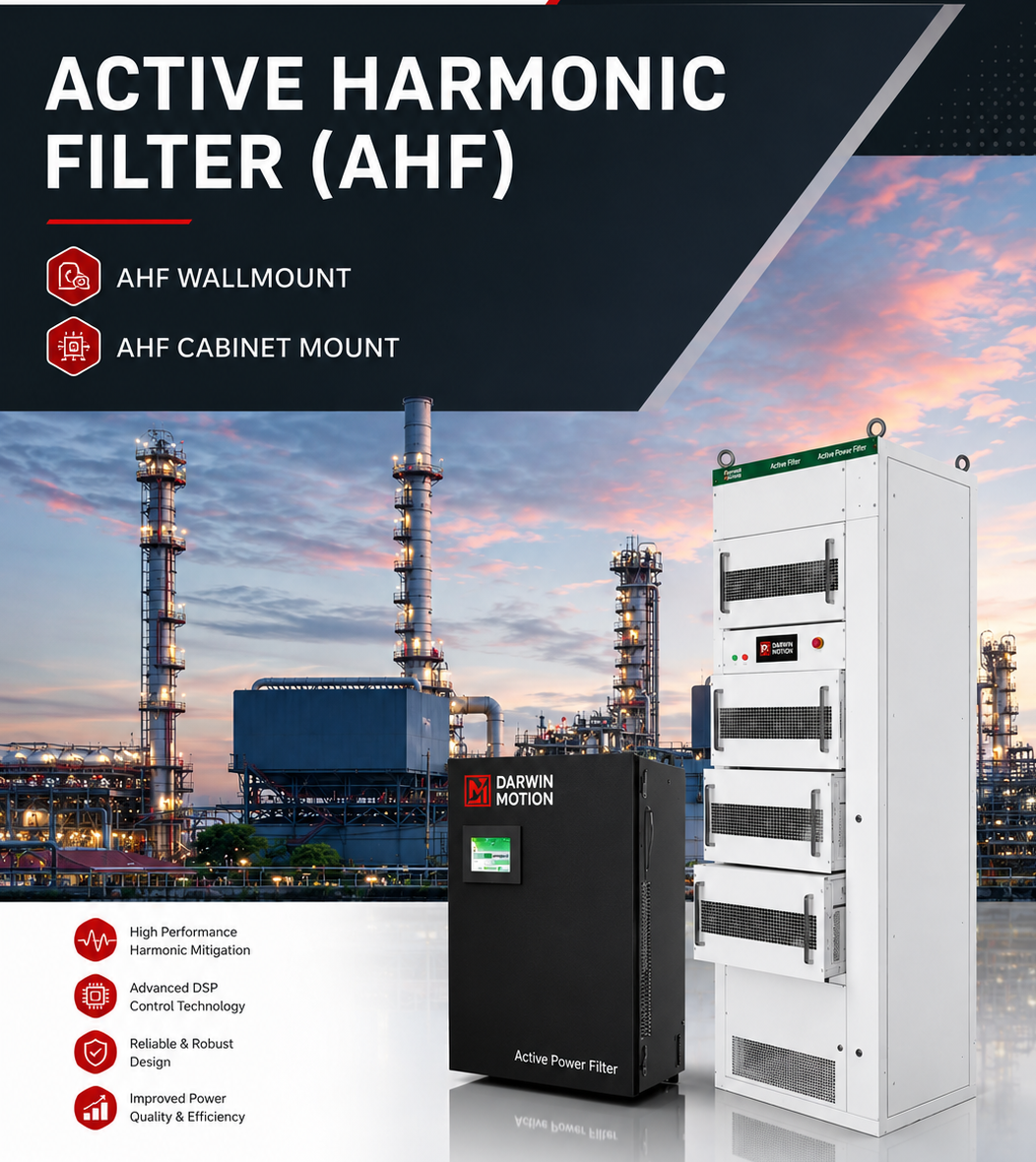
In today's rapidly evolving industrial environment, maintaining excellent electrical power quality is essential for ensuring operational efficiency, equipment reliability, and uninterrupted production. Modern manufacturing facilities depend on advanced electrical equipment such as Variable Frequency Drives (VFDs), AC Drives, UPS systems, servo drives, welding machines, and automated production systems. Although these technologies improve productivity, they can generate harmonic distortion that negatively affects industrial electrical networks.
Implementing the right Active Harmonic Filter solution is an effective way to reduce harmonic distortion, improve power factor, protect electrical equipment, and optimize energy performance. Darwin Motion, an established AC Drive manufacturer, provides advanced power quality solutions designed to meet the changing requirements of modern industrial applications.
Industrial power systems frequently experience electrical disturbances caused by non-linear loads. Equipment such as VFDs, rectifiers, UPS systems, CNC machines, and electronic power converters draws current in a non-sinusoidal waveform, generating unwanted harmonic currents.
These harmonics can create several operational challenges, including:
To overcome these challenges, industries require intelligent harmonic mitigation technologies that continuously monitor and improve electrical power quality.
An Active Harmonic Filter (AHF) is an advanced electronic power quality device designed to identify and compensate for harmonic currents generated by non-linear electrical loads. It continuously monitors the electrical network and injects equal and opposite compensating currents to reduce unwanted harmonics.
Unlike conventional passive filters, active filtering technology can dynamically respond to changing load conditions. This makes it suitable for industrial environments where electrical loads frequently fluctuate throughout the production cycle.
An active harmonic filtering system operates through intelligent electronic monitoring and compensation technology. Its working process generally involves the following steps:
This intelligent operation helps maintain a cleaner current waveform and improves the overall performance of industrial electrical systems.
Selecting the right harmonic filtering solution is important for achieving long-term electrical efficiency and reliable industrial operations. Different industries have different power consumption patterns, harmonic levels, and electrical infrastructure requirements.
Modern industrial facilities require harmonic compensation systems that can respond quickly to changing electrical loads. Active harmonic filters continuously detect and compensate for harmonic currents, helping maintain stable power quality even when multiple machines operate simultaneously.
Poor power factor can increase electrical demand and create additional stress on distribution infrastructure. Advanced active filtering solutions can provide reactive power compensation, helping improve power factor and optimize electrical system performance.
Uneven electrical loads across three phases can result in additional current imbalance and reduced system efficiency. Active harmonic filters with load balancing functionality help compensate for phase current imbalances and improve electrical distribution performance.
Excessive harmonic currents increase losses in electrical infrastructure and can contribute to equipment overheating. Properly selected harmonic filters help reduce harmonic-related electrical stress, improve system efficiency, and support longer equipment operating life.
Industrial facilities often expand their operations and introduce additional electrical equipment. Modular active filtering systems offer flexibility for future expansion and can be integrated into new electrical installations or existing industrial networks.
When selecting an industrial power quality solution, choosing an experienced manufacturer is essential. Darwin Motion is a recognized industrial automation and AC Drive manufacturer offering advanced electrical solutions for modern manufacturing and infrastructure applications.
Darwin Motion focuses on delivering intelligent Active Harmonic Filter technology designed to reduce harmonic distortion, improve power factor, and enhance the reliability of industrial electrical systems.
Darwin Motion offers advanced harmonic filtering technology with features designed to improve industrial electrical performance.
Actual performance depends on system configuration, load characteristics, installation conditions, and correct filter sizing.
Active harmonic filtering technology is suitable for various industries that operate non-linear electrical equipment and require reliable power quality management.
Manufacturing facilities use CNC machines, automated production equipment, AC Drives, and VFDs. Active filtering helps reduce harmonic distortion and supports reliable production operations.
Textile manufacturing plants operate spinning machines, weaving equipment, motors, and variable-speed drives. Harmonic compensation helps improve the electrical performance of these installations.
Steel and cement plants operate heavy electrical machinery, large motors, converters, and industrial drives. Active filtering helps manage harmonic currents and reduce electrical system stress.
These industries depend on sensitive automation systems, pumps, compressors, and process control equipment. Better power quality supports stable operations and helps protect critical electrical infrastructure.
Data centers, hospitals, IT parks, and commercial buildings use UPS systems, HVAC equipment, and electronic loads. Harmonic filtering helps improve electrical reliability and supports the operation of sensitive equipment.
Both active and passive harmonic filters are used to improve industrial power quality. However, their working principles and application suitability differ.
For industrial facilities with frequently changing electrical loads, active filtering can offer greater flexibility and dynamic compensation capabilities.
Choosing the right harmonic filtering solution requires a proper understanding of the electrical distribution system and its harmonic characteristics.
Before installing an active harmonic filter, industries should conduct a detailed power quality assessment. Measuring harmonic currents, voltage distortion, load variations, and electrical system characteristics helps determine the appropriate filter capacity and installation location.
Correct selection and commissioning are essential for achieving the desired harmonic mitigation performance.
Maintaining excellent electrical power quality is no longer optional for modern industrial facilities. Harmonic distortion can increase operational expenses, reduce equipment reliability, and negatively affect production performance.
Investing in advanced harmonic mitigation technology helps industries create more efficient, stable, and reliable electrical infrastructure.
Darwin Motion, an established AC Drive manufacturer, provides advanced industrial power quality solutions, including active harmonic filtering technology, designed to support the changing needs of modern industries. With a focus on intelligent compensation, industrial reliability, and energy efficiency, Darwin Motion helps businesses improve electrical system performance.
Explore Darwin Motion's advanced Active Harmonic Filter solutions to discover how intelligent harmonic compensation can support your industrial power quality management requirements.
Selecting the best active harmonic filtering solution is an important step toward improving industrial power quality, reducing harmonic distortion, protecting electrical equipment, and enhancing operational efficiency.
With modern features such as real-time harmonic compensation, reactive power correction, three-phase load balancing, and intelligent monitoring, active harmonic filters provide an effective solution for industries facing complex electrical challenges.
Darwin Motion combines industrial automation expertise with advanced power quality technologies to deliver solutions for modern industrial applications. Businesses looking for reliable harmonic mitigation and improved electrical performance can consider Darwin Motion as a solution partner for their power quality management requirements.


