Posted on 24th Aug 2026
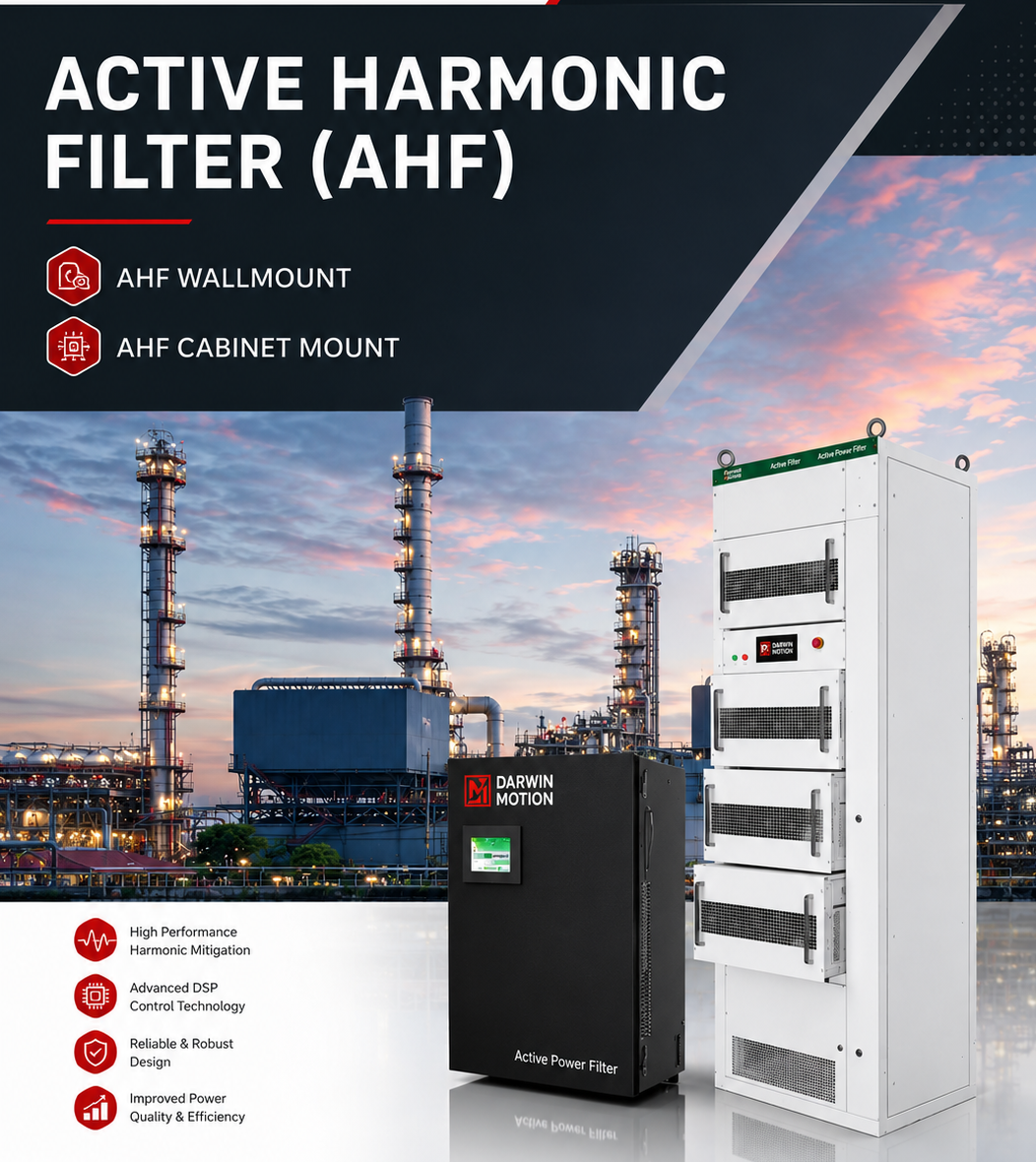
Modern cement plants depend on high-power electrical equipment such as crushers, raw mills, kiln drives, cement grinding mills, conveyors, compressors, fans, pumps, and packing systems. Many of these applications use Variable Frequency Drives (VFDs) and other power-electronic equipment that can introduce harmonic distortion into the electrical network.
Installing a Harmonic Filter for Cement Plant can help improve electrical power quality, reduce harmonic distortion, protect critical equipment, and support reliable plant operation. Darwin Motion AC Drive provides industrial automation and power-quality solutions designed for demanding applications, including the cement industry.
Cement manufacturing involves continuous-duty machinery and high-capacity electrical systems. Nonlinear loads can generate harmonic currents that circulate through the plant's electrical distribution network. Excessive harmonics can increase losses and electrical stress and may affect the performance and reliability of connected equipment.
A properly selected harmonic mitigation system can help maintain cleaner power and improve the overall operating conditions of the plant's electrical infrastructure.
Several types of equipment commonly found in cement manufacturing facilities can contribute to harmonic distortion, including:
When harmonic distortion is not adequately controlled, cement plants may experience several electrical and operational challenges.
An Active Harmonic Filter (AHF) monitors the electrical system and generates compensating currents to reduce unwanted harmonic components. This dynamic approach is particularly useful in cement plants because electrical loads can change according to production requirements.
Instead of relying only on fixed compensation, an active harmonic filtering system can respond to changing nonlinear loads and provide dynamic harmonic mitigation.
Harmonic filters help reduce unwanted harmonic currents and improve the quality of electrical power supplied throughout the plant.
Better power quality can reduce electrical stress on transformers, motors, drives, switchgear, cables, and other important plant equipment.
Reducing unnecessary electrical losses can support more efficient operation of the plant's power distribution system.
Improved electrical stability can help minimize disturbances and nuisance tripping that may interrupt continuous cement production.
By reducing excessive heating and electrical stress, harmonic mitigation can contribute to improved equipment service life and reduced maintenance requirements.
A harmonic filtering solution can be considered at different sections of a cement manufacturing facility depending on the plant's electrical architecture and harmonic profile.
Darwin Motion is an industrial automation company offering AC drives, servo drives, drive systems, and related industrial solutions. The company identifies the cement industry among the industries it serves and focuses on improving energy efficiency, asset reliability, productivity, and performance.
Darwin Motion's engineering approach can help industries evaluate their application requirements and select an appropriate power-quality solution for their electrical system.
Selecting a harmonic filter should be based on the actual characteristics of the plant's electrical network rather than using a one-size-fits-all approach. A power-quality assessment can help identify the harmonic sources and determine the appropriate filtering capacity.
Conventional passive filters can be effective for specific harmonic conditions, but their performance depends strongly on the system design and load profile. Active Harmonic Filters provide dynamic compensation and can adapt to changing electrical loads.
For cement plants with multiple VFDs and rapidly changing operating conditions, an active solution may provide greater flexibility. The final selection should be based on detailed electrical measurements and engineering analysis.
Power quality has a direct relationship with the reliability of electrical equipment and the continuity of industrial production. A properly engineered harmonic mitigation system can support:
Harmonic distortion is an important power-quality consideration for modern cement manufacturing facilities because of the extensive use of VFDs, drives, converters, and other nonlinear electrical loads. A properly engineered Harmonic Filter for Cement Plant can help reduce harmonic distortion, improve power quality, protect electrical equipment, and support reliable production.
Darwin Motion AC Drive combines industrial automation expertise with drive and power-quality solutions for demanding industrial applications. Cement plants can benefit from an application-specific harmonic mitigation strategy designed around their electrical system, operating conditions, and production requirements.
If your cement plant is experiencing high harmonic distortion, transformer heating, VFD disturbances, nuisance tripping, or other power-quality issues, a detailed electrical assessment can help identify the appropriate harmonic mitigation approach. Contact Darwin Motion AC Drive Manufacturer to discuss your cement plant application and power-quality requirements.


