Posted on 3rd Sep 2026
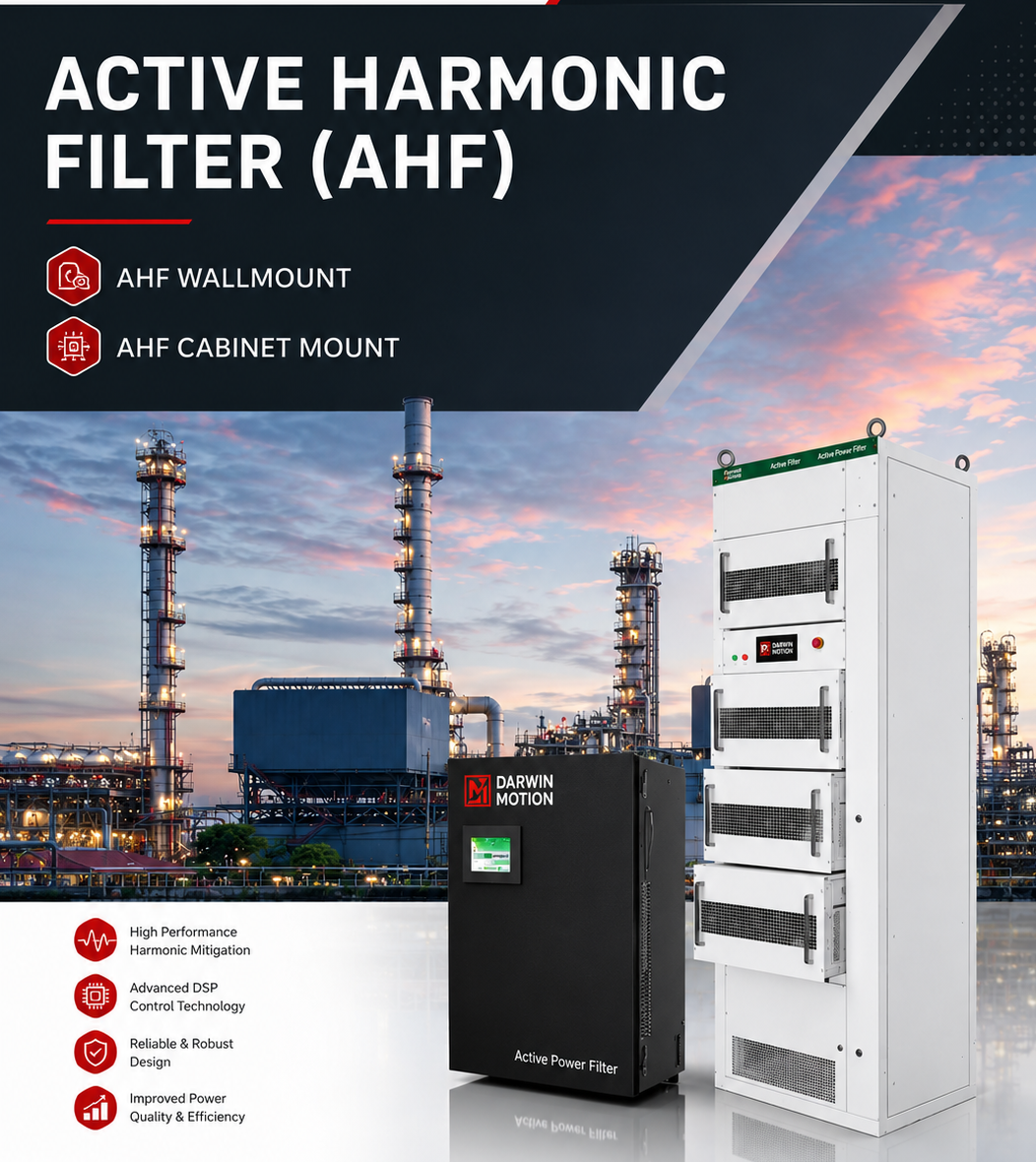
Modern water and wastewater treatment facilities rely heavily on automation to handle massive fluid volumes, maintain continuous pressure, and keep operational costs under control. At the heart of these automated systems are Variable Frequency Drives (VFDs), such as high-performance AC Drives, which control pumps, blowers, agitators, and compressors. While AC Drives deliver substantial energy savings and precise process control, they are non-linear loads that introduce harmonic distortion into the electrical grid. To ensure reliability, regulatory compliance, and equipment longevity, implementing a robust Harmonic Filter for Water Treatment Plant systems has become an operational necessity.
Harmonics are current and voltage distortions created by non-linear electrical loads. When semiconductor switching devices inside AC Drives draw current in short, non-sinusoidal pulses, they generate high-frequency harmonic currents that reflect back into the plant's power distribution system.
Without proper mitigation, harmonic distortion leads to a range of costly infrastructure problems:
As a leading industry AC Drive manufacturer, Darwin Motion engineers robust frequency converters designed specifically to handle the demanding environments of industrial water management. Darwin Motion AC Drives enable smooth acceleration, precise flow control, and maximum energy efficiency across pumping systems.
To maximize the operational life of these motor controllers and preserve overall grid power quality, combining Darwin Motion AC Drives with active harmonic filtering provides a complete, high-efficiency power solution.
Active Harmonic Filters (AHFs) monitor the load current in real time and inject counter-phase harmonic currents to neutralize distortion instantly. Unlike passive filters, active filtering dynamically adapts to changing load profiles across multiple pumps and operating cycles.
By actively counteracting current harmonics up to the 50th order, active harmonic filters bring Total Harmonic Distortion (THD) levels down to under 5%, fully complying with international grid standards and local utility mandates.
Cleaner power lowers operating temperatures for transformers, switchgear, cable runs, and motor drives. Suppressing voltage harmonics prevents premature insulation breakdown in heavy-duty Darwin Motion AC Drives and connected pump motors.
Filtering out harmonic currents improves the overall displacement power factor, reducing true RMS current consumption across the plant. This reduces total kVA demand, optimizes transformer capacity, and prevents reactive power charges on utility bills.
Water treatment plants frequently rely on emergency diesel generators during main grid outages. High harmonic distortion can cause generator voltage instability and system failure. Installing an active harmonic filter ensures stable generator operation during emergency switchovers.
Upgrading power quality across a water treatment facility requires systematic evaluation and correct sizing:
Maintaining clean electrical power is just as critical as maintaining clean water output. Integrating an active Harmonic Filter for Water Treatment Plant infrastructure safeguards critical machinery, maximizes the reliability of advanced Darwin Motion AC Drive systems, and ensures complete compliance with global power quality regulations.


