Posted on 19th Nov 2026
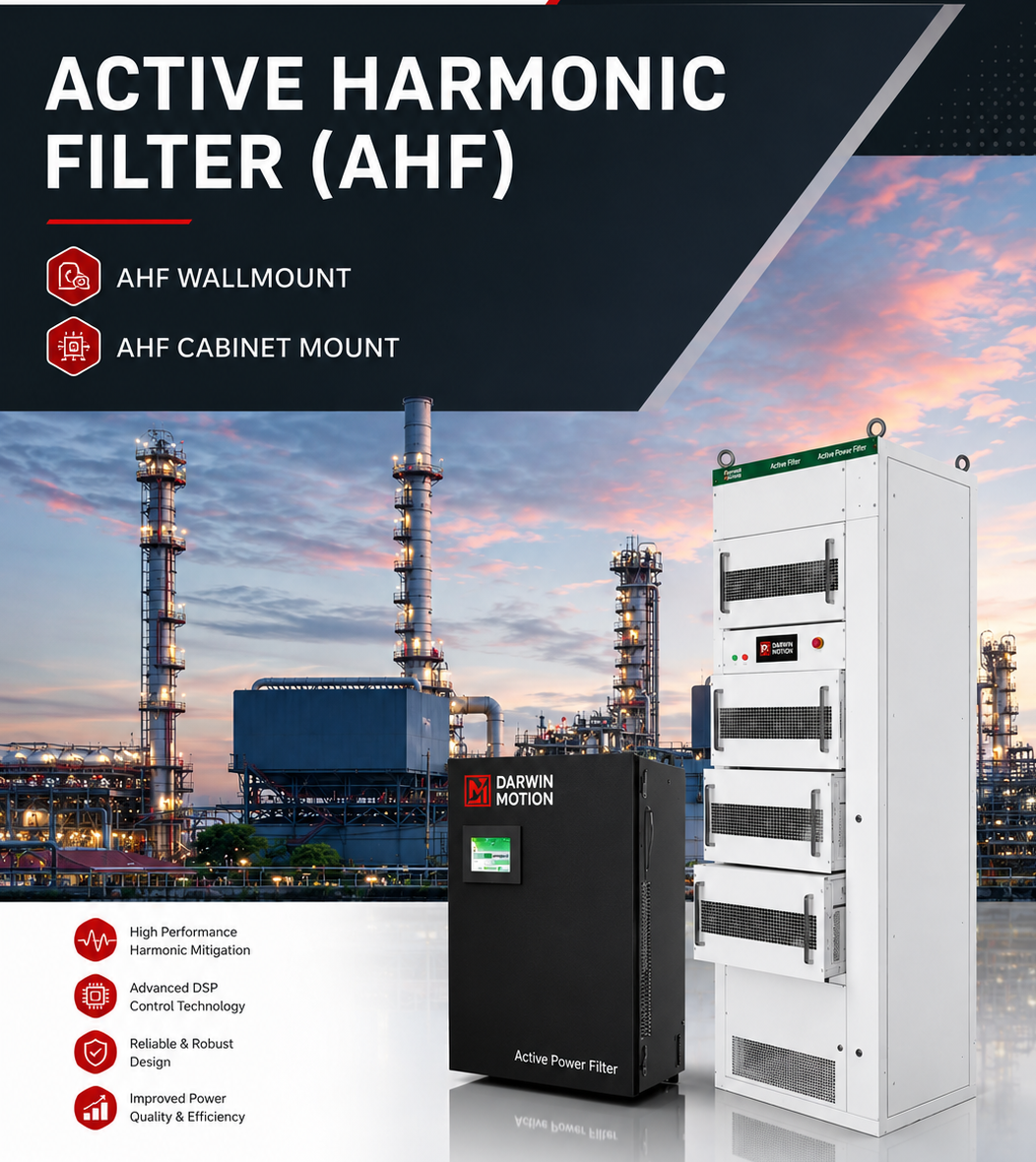
Energy efficiency and electrical reliability are two of the most important priorities in modern industrial operations. Manufacturing plants, processing facilities, automation systems, and other industrial environments depend on stable electrical power to maintain productivity and protect valuable equipment. However, the increasing use of non-linear electrical loads such as Variable Frequency Drives (VFDs), rectifiers, UPS systems, and switching power supplies introduces harmonic distortion into electrical networks.
These harmonics can increase electrical losses, generate excessive heat, reduce equipment lifespan, and affect the overall performance of industrial power systems. An Active Harmonic Filter offers an advanced solution by identifying and compensating for unwanted harmonic currents, helping industries achieve cleaner power and more reliable operations.
As an experienced Darwin Motion AC Drive manufacturer, Darwin Motion focuses on industrial power quality solutions that help businesses improve electrical performance, optimize energy utilization, and maintain dependable operations.
Harmonic distortion occurs when electrical loads draw current in a non-sinusoidal waveform. Unlike traditional linear loads, modern electronic equipment consumes current in a way that introduces additional frequency components into the electrical supply.
These unwanted frequency components are known as harmonics. They can affect the performance of electrical distribution systems and create several operational challenges.
Harmonics are commonly generated by equipment used in industrial automation and manufacturing processes, including:
An Active Harmonic Filter is an advanced power quality device designed to reduce harmonic distortion in electrical systems. It continuously monitors the current waveform, detects unwanted harmonic components, and injects compensating currents to counteract them.
Unlike passive filtering solutions, which generally operate around predetermined frequencies, active filtering technology dynamically responds to changing load conditions. This makes it particularly suitable for industrial facilities where electrical loads frequently change throughout production cycles.
An active harmonic filtering system typically operates through the following process:
This process helps reduce harmonic current distortion and improves the overall quality of electrical power supplied to industrial equipment.
Harmonic currents can increase electrical losses and place additional stress on power distribution components. By reducing these unwanted currents, active harmonic filtering helps industries improve the efficiency and performance of their electrical infrastructure.
Harmonic currents contribute to additional heating and resistive losses in cables, transformers, and other electrical components. An Active Harmonic Filter reduces harmonic current levels, helping minimize these additional losses and improve the efficiency of the electrical distribution network.
Many modern active harmonic filters also provide reactive power compensation, depending on their design and configuration. This capability can help improve power factor, reduce reactive current demand, and optimize the utilization of electrical infrastructure.
Excessive harmonic currents increase the loading on transformers, conductors, and distribution equipment. By compensating for harmonic currents, active filters can help reduce unnecessary electrical loading and make better use of existing power distribution capacity.
Power quality problems can affect sensitive automation systems, control circuits, and electronic equipment. Reducing harmonic distortion helps create a more stable electrical environment, supporting consistent performance across industrial operations.
Industrial electrical equipment represents a significant capital investment. Harmonic distortion can gradually affect equipment performance, increase maintenance requirements, and contribute to unexpected operational interruptions.
Harmonic currents can increase transformer winding losses and generate additional heat. Prolonged exposure to excessive heating may accelerate insulation deterioration and reduce transformer service life. Harmonic compensation helps reduce this additional stress.
Harmonic distortion can contribute to additional motor heating, losses, and operational disturbances. Improving the electrical supply quality helps reduce harmonic-related stress on motors and supports reliable motor operation.
Harmonic frequencies can interact with power factor correction capacitor banks and create resonance conditions. These conditions may result in excessive current and overheating. Proper harmonic analysis and filtering help reduce associated risks and support safer capacitor bank operation.
Industrial PLCs, automation controllers, sensors, and electronic monitoring systems require reliable power quality. Reducing harmonic distortion can help minimize power quality-related disturbances and support dependable equipment performance.
Excessive electrical heating and power quality disturbances can increase equipment failures and maintenance requirements. By addressing harmonic problems, active filtering solutions help industries improve system reliability and reduce the possibility of unexpected downtime.
Active harmonic filters are suitable for industrial environments where non-linear loads create significant harmonic distortion and power quality challenges.
Both active and passive harmonic filters are used to address harmonic distortion. However, their operating principles and suitability differ depending on the electrical system and application requirements.
The right solution depends on harmonic measurements, load characteristics, installation conditions, and the required level of power quality improvement.
Choosing the right power quality solution is essential for achieving reliable and efficient industrial operations. Darwin Motion AC Drive manufacturer offers industrial power electronics and power quality solutions designed to address the electrical challenges faced by modern industries.
Darwin Motion focuses on helping industrial facilities improve power quality, manage harmonic distortion, and enhance the performance of electrical systems through application-oriented solutions.
Explore the Active Harmonic Filter solutions from Darwin Motion to understand how advanced harmonic compensation can help improve industrial power quality.
Harmonic distortion is a significant power quality challenge in modern industrial electrical systems. It can increase electrical losses, cause excessive heating, affect sensitive equipment, and create additional maintenance requirements.
Installing a properly selected Active Harmonic Filter helps industries reduce harmonic currents, improve electrical distribution performance, and protect critical equipment from harmonic-related stress. These improvements can contribute to better energy efficiency, increased equipment reliability, and more consistent industrial operations.
With its focus on industrial power electronics and power quality technologies, Darwin Motion AC Drive manufacturer provides solutions that help industries move towards more efficient, reliable, and optimized electrical systems.
An Active Harmonic Filter reduces unwanted harmonic currents, helping minimize additional electrical losses and heating in cables, transformers, and other distribution components. Some models also provide reactive power compensation.
Yes. By reducing harmonic distortion, an active filter can help minimize harmonic-related motor heating and electrical stress, supporting reliable motor operation.
Manufacturing, textile, automotive, pharmaceutical, HVAC, and water treatment industries can benefit from active harmonic filtering, particularly when they operate multiple non-linear electrical loads.
Many active harmonic filters offer reactive power compensation in addition to harmonic mitigation. However, the power factor improvement depends on the filter's design, configuration, and operating capacity.
Yes. VFDs are common sources of harmonic distortion. Active harmonic filters can compensate for the harmonic currents generated by VFD installations, subject to appropriate system sizing and configuration.
Selection should be based on harmonic measurements, load current, harmonic spectrum, system voltage, required compensation capacity, installation conditions, and future load expansion requirements. A professional power quality assessment is recommended before installation.


