Posted on 23rd Nov 2026
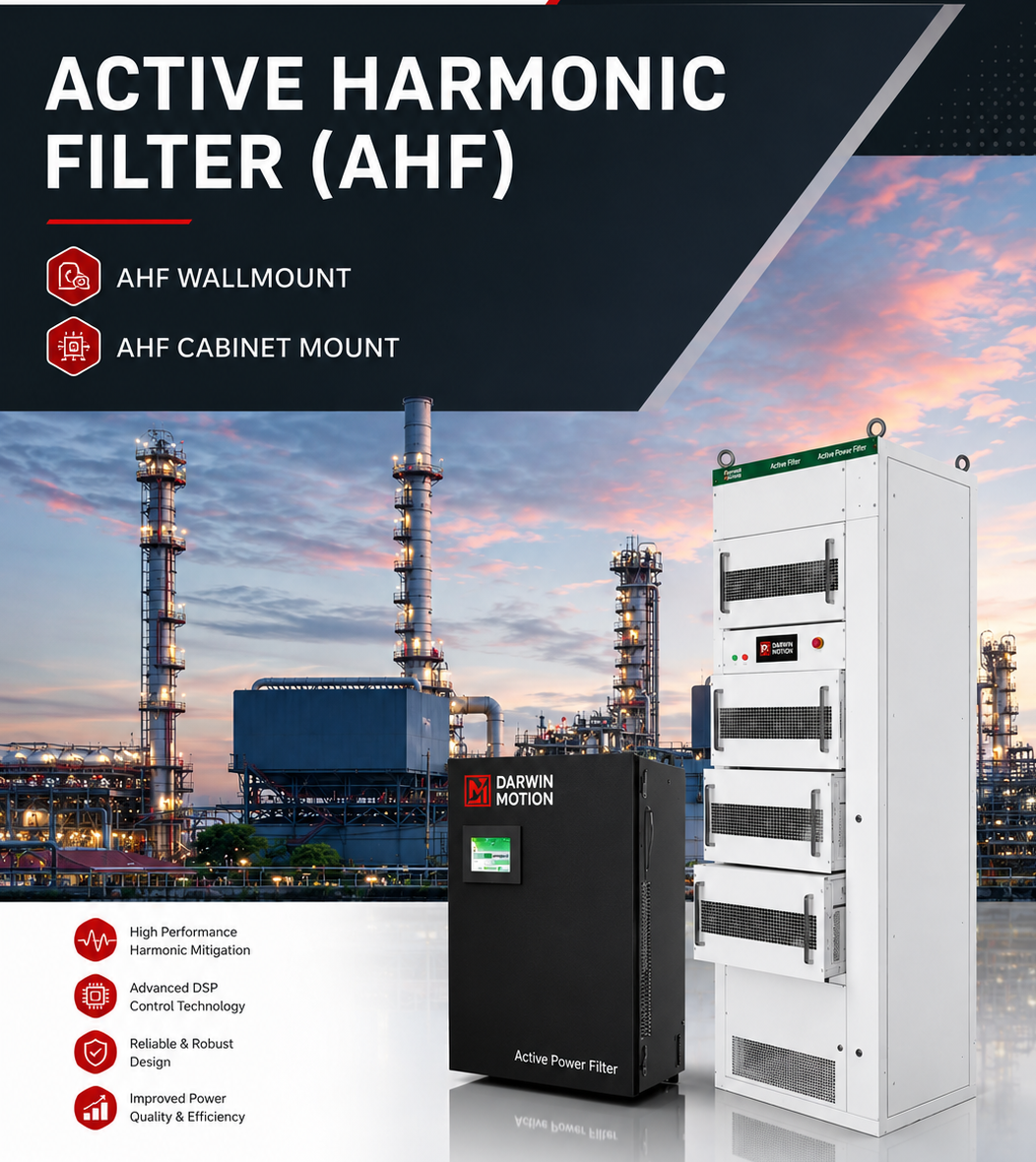
Energy efficiency and reliable equipment performance are two of the most important priorities for modern industrial facilities. Manufacturing plants, processing units, commercial buildings, and heavy industries depend on electrical systems to operate continuously. However, power quality problems such as harmonic distortion can negatively affect electrical efficiency, increase operating costs, and damage sensitive industrial equipment.
One of the most effective solutions for addressing these challenges is an Active Harmonic Filter. This advanced power quality device helps reduce unwanted electrical harmonics, improve power factor, minimize electrical losses, and protect essential industrial equipment.
As an experienced AC Drive manufacturer, Darwin Motion understands the importance of reliable electrical infrastructure and efficient industrial automation. By offering solutions focused on power quality and industrial performance, Darwin Motion supports industries in achieving better operational efficiency, equipment reliability, and long-term energy savings.
Harmonics are unwanted electrical frequencies that occur as multiples of the fundamental power supply frequency. In India, the standard electrical supply frequency is 50 Hz. Harmonic distortion is commonly generated by nonlinear electrical loads that draw current in a non-sinusoidal waveform.
Modern industrial facilities use several types of electronic equipment that can generate harmonics, including:
When multiple nonlinear loads operate simultaneously, harmonic distortion can increase throughout the electrical distribution network. This creates additional stress on transformers, cables, motors, capacitors, and other electrical components.
An Active Harmonic Filter (AHF) is an advanced electronic device designed to monitor and reduce harmonic distortion in electrical power systems. It continuously measures the current drawn by nonlinear loads and generates compensating currents to counteract unwanted harmonics.
Unlike conventional passive harmonic filters, which generally use fixed combinations of capacitors, inductors, and resistors, active filters use power electronics and intelligent control technology to respond dynamically to changing electrical loads.
An active harmonic filter works through a continuous monitoring and compensation process. Its operation generally involves the following steps:
This process helps maintain cleaner electrical waveforms and improves the overall quality of power supplied to industrial equipment.
Harmonic distortion can increase electrical losses and reduce the effective capacity of an industrial power distribution system. Installing a properly designed active harmonic filter helps minimize these problems and supports more efficient electrical operations.
Harmonic currents increase the effective current flowing through electrical cables, transformers, and other distribution components. Higher current can result in additional heat generation and resistive losses.
An active harmonic filter reduces unwanted harmonic currents, helping minimize unnecessary heating and electrical losses in the distribution network. This can improve the overall efficiency of industrial electrical infrastructure.
Poor power factor increases the apparent power required to operate industrial equipment. This can place additional demand on transformers, cables, and electrical distribution systems.
Many modern active harmonic filters offer reactive power compensation in addition to harmonic mitigation. When this function is supported and correctly configured, the filter can improve true power factor and help optimize electrical capacity utilization.
Transformers and electrical cables operating under high harmonic conditions can experience additional heating and losses. Over time, this can reduce their operating efficiency and available capacity.
By reducing harmonic currents, active harmonic filters help reduce harmonic-related stress on electrical distribution equipment and support more reliable operation.
Industrial electricity expenses are influenced by energy consumption, demand, power factor, and operational efficiency. Harmonic-related losses can contribute to unnecessary energy consumption.
By improving power quality and reducing avoidable electrical losses, an appropriately selected active harmonic filter can contribute to lower operating costs. Actual savings depend on the existing harmonic levels, electrical installation, load profile, and electricity tariff structure.
Industrial equipment represents a significant investment. Protecting electrical machinery from power quality problems is essential for reducing maintenance expenses and avoiding unexpected production interruptions.
An active harmonic filter provides several important equipment protection benefits.
Harmonic currents can increase transformer losses and operating temperatures. Continuous exposure to excessive heat can accelerate insulation deterioration and reduce transformer service life.
Reducing harmonic distortion helps minimize harmonic-related heating and supports improved transformer operating conditions.
Industrial motors are widely used in manufacturing plants, pumping stations, conveyors, compressors, and production machinery. Poor power quality can contribute to additional heating, vibration, and inefficient operation.
An active harmonic filter helps improve the electrical environment by reducing harmonic distortion, supporting more reliable operation of motor-driven systems.
Excessive harmonic currents can increase thermal stress in electrical distribution equipment and protective devices. This may contribute to unwanted tripping and operational interruptions.
Harmonic mitigation helps reduce this additional electrical stress, improving the reliability of the distribution system when correctly coordinated with the installed protection devices.
Modern industrial facilities rely on PLCs, sensors, control panels, communication systems, and automated machinery. Electrical disturbances and poor power quality can affect the performance of sensitive electronic equipment.
By reducing harmonic distortion, active harmonic filters help create a more stable electrical environment for industrial automation and control systems.
Equipment overheating, electrical failures, and unexpected protective device trips can interrupt industrial production. These interruptions can result in higher maintenance expenses and missed production targets.
An appropriately designed harmonic mitigation system helps reduce harmonic-related problems, supporting improved equipment reliability and production continuity.
Active harmonic filters are suitable for a wide range of industrial and commercial applications where nonlinear loads create harmonic distortion.
Manufacturing facilities frequently use multiple AC drives, VFDs, automated production machines, and electronic control systems. Active harmonic filters help manage harmonic distortion and improve the reliability of electrical distribution systems.
Steel plants and metal processing industries operate heavy electrical equipment, variable-speed drives, furnaces, and other nonlinear loads. Harmonic mitigation can help reduce electrical stress and improve power quality.
Textile manufacturing facilities use motors, spinning machines, compressors, and variable-frequency drives. Active harmonic filters help control harmonic distortion and support stable production operations.
These industries depend on automated equipment, precision control systems, and continuous production processes. Improved power quality helps support the reliable operation of sensitive electrical and electronic equipment.
Large commercial buildings and data centers operate UPS systems, HVAC equipment, electronic loads, and power conversion devices. Active harmonic filters can help reduce harmonic pollution and improve electrical system performance.
Both active and passive harmonic filters are used to improve electrical power quality. However, their operating principles and applications differ.
The right solution depends on the harmonic spectrum, installation conditions, budget, load characteristics, and required power quality performance.
Choosing the right industrial electrical equipment manufacturer is important for achieving reliable performance, operational efficiency, and long-term value.
Darwin Motion is an AC Drive manufacturer focused on delivering industrial drive and electrical solutions that support modern manufacturing and automation requirements.
With an understanding of industrial motor control, electrical distribution, and power quality challenges, Darwin Motion emphasizes solutions that help industries improve operational performance and equipment reliability.
For industries looking to improve their electrical infrastructure, explore the Active Harmonic Filter solutions from Darwin Motion to learn more about harmonic mitigation and power quality improvement.
Selecting an appropriate active harmonic filter requires a proper assessment of the electrical installation. A filter should not be selected only on the basis of connected load capacity.
Before installing a harmonic filter, industries should conduct a power quality analysis to identify the actual harmonic distortion levels and their sources. Measurements at the point of common coupling (PCC) and important load distribution points help determine the required compensation capacity.
A detailed assessment also helps engineers select the appropriate filter rating, installation arrangement, and compensation strategy. Where applicable, the system should be evaluated against IEEE 519 and relevant local utility requirements.
Investing in an appropriately sized active harmonic filter can provide several long-term advantages for industrial facilities.
Energy efficiency and equipment protection are essential for the long-term success of industrial operations. Harmonic distortion can increase electrical losses, create excessive heating, affect sensitive electronic equipment, and reduce the reliability of industrial electrical systems.
An Active Harmonic Filter provides an effective solution by dynamically compensating unwanted harmonic currents and improving overall power quality. With the right filter selection and installation, industries can reduce harmonic-related electrical problems, improve equipment operating conditions, and support more efficient power distribution.
As an AC Drive manufacturer, Darwin Motion recognizes the importance of reliable industrial electrical solutions. By focusing on AC drive technology and power quality requirements, Darwin Motion aims to help industries build more efficient, reliable, and productive operations.
If your industrial facility is experiencing harmonic distortion, transformer overheating, poor power factor, or frequent electrical disturbances, consider evaluating an appropriate harmonic mitigation solution with Darwin Motion.
The main purpose of an active harmonic filter is to reduce harmonic distortion in electrical systems by generating compensating currents that counteract unwanted harmonic components.
An active harmonic filter can reduce harmonic-related electrical losses and improve power quality. However, the actual reduction in electricity consumption depends on the existing harmonic distortion, system configuration, and operating conditions.
Yes. Many active harmonic filters offer reactive power compensation, which can improve displacement power factor in addition to improving distortion power factor through harmonic mitigation.
Industries using VFDs, AC drives, rectifiers, UPS systems, and other nonlinear electrical loads can benefit from active harmonic filters. Common applications include steel, textile, pharmaceutical, cement, automotive, food processing, and manufacturing industries.
An active harmonic filter uses electronic control and compensating currents to dynamically reduce harmonics, while a passive harmonic filter uses fixed electrical components to attenuate selected harmonic frequencies.
Darwin Motion is an AC Drive manufacturer focused on industrial drive and electrical solutions. Businesses can explore its product offerings and power quality solutions to identify options suited to their industrial requirements.


