Posted on 5th Oct 2026
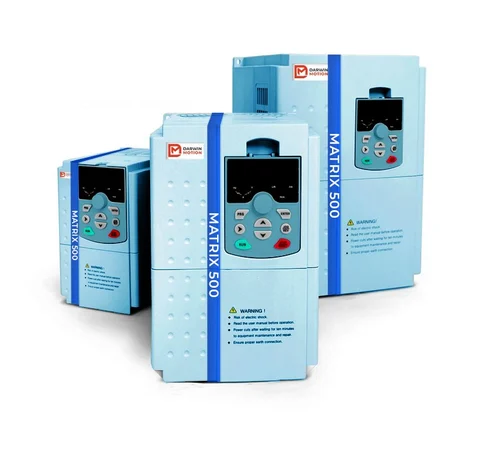
VFD drives for railway application are increasingly important for achieving precise motor control, efficient operation, and reliable performance in modern railway systems. Variable Frequency Drives (VFDs) regulate motor speed and torque by controlling the frequency and voltage supplied to AC motors, making them suitable for a wide range of railway auxiliary and industrial applications.
Darwin Motion AC Drive manufacturer provides advanced AC drive solutions designed to support demanding motor-control requirements. With precise speed control, adjustable operating parameters, and robust drive technology, VFD solutions can help railway equipment operate according to changing load and performance requirements.
Railway systems use electric motors in several critical and auxiliary applications, including ventilation, cooling, compressors, pumps, air-conditioning systems, and other onboard or trackside equipment. VFD technology enables these motors to operate at the required speed instead of continuously running at a fixed speed.
In traction systems, variable-voltage variable-frequency (VVVF) inverter technology is used to control AC traction motors. Railway drive systems can therefore regulate motor voltage, frequency, torque, and speed according to operating conditions.
HVAC systems in passenger coaches, metro trains, locomotives, and railway facilities require accurate control of fans and compressors. VFDs can adjust motor speed according to cooling or ventilation demand, helping improve operational efficiency.
Ventilation systems are essential for maintaining suitable operating conditions in coaches, equipment rooms, tunnels, stations, and other railway infrastructure. VFDs provide variable-speed control for ventilation motors and can reduce unnecessary energy consumption during periods of lower demand.
Compressed air systems are widely used in railway applications. A VFD can regulate compressor motor speed according to air demand, helping provide controlled operation while reducing mechanical and electrical stress associated with frequent direct-on-line starting.
Pumps used for cooling, water circulation, lubrication, and other auxiliary functions can benefit from variable-speed operation. VFD technology enables pump speed to be matched with actual system requirements.
Modern electric railway traction systems use power-electronic converters and inverters to provide variable-voltage, variable-frequency power to traction motors. Similar drive principles are also used in auxiliary motor systems where controlled speed and torque are required.
Darwin Motion AC Drive manufacturer develops AC drive solutions for industrial motor-control applications where precise speed regulation, reliable operation, and efficient power management are important.
For railway-related applications, drive selection depends on factors such as motor rating, input supply, output requirements, duty cycle, environmental conditions, control method, braking requirements, communication requirements, and applicable project specifications.
Railway equipment frequently operates under changing load conditions. Running a motor continuously at its maximum speed when full capacity is not required can result in unnecessary energy consumption. A VFD allows motor speed to be adjusted according to the actual requirement.
This approach is particularly useful for variable-torque applications such as fans and pumps. By matching motor operation with system demand, VFD technology can contribute to more efficient railway auxiliary systems.
Railway environments can place demanding requirements on electrical and electronic equipment. Factors such as vibration, temperature variation, continuous operation, electrical disturbances, and limited installation space may need to be considered during system design.
Therefore, selecting the appropriate drive requires an application-specific engineering approach. The VFD, motor, control system, protection devices, and mechanical load should be evaluated as an integrated system.
VFD drives for railway application can provide precise motor control, flexible operation, and improved energy management across a wide range of railway auxiliary and motor-driven systems. From HVAC and ventilation to compressors, pumps, cooling systems, and other motor-control applications, VFD technology provides an effective way to match motor performance with actual operating requirements.
Darwin Motion AC Drive manufacturer offers AC drive solutions for industrial and demanding motor-control applications. To explore Darwin Motion's VFD solutions and identify a suitable drive for your railway-related application, visit VFD Drives.
For railway equipment manufacturers, system integrators, OEMs, and industrial users, choosing the correct VFD requires consideration of motor specifications, operating conditions, control requirements, and application duty. Darwin Motion can support application-specific AC drive requirements with suitable drive solutions.


