Posted on 24th Oct 2026
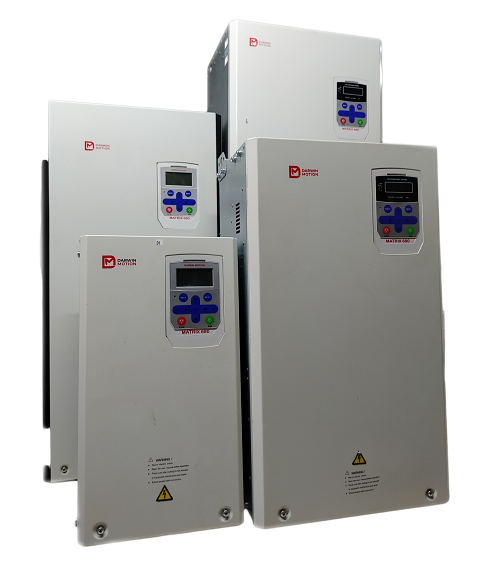
Stable electrical power is essential for maintaining productivity, protecting industrial machinery, and ensuring consistent manufacturing performance. Voltage fluctuations, sudden load variations, and unstable electrical supply conditions can affect motor performance, interrupt production, and increase equipment maintenance requirements. Implementing suitable Voltage Stabilization Solutions helps industries improve motor control, manage operating conditions, and support dependable plant operations.
Darwin Motion AC Drive manufacturer focuses on industrial drive and automation solutions that help businesses achieve controlled motor operation, optimize energy consumption, and improve process efficiency. By selecting suitable variable frequency drives (VFDs) and integrating them with an appropriately designed electrical system, industries can address several motor-control challenges associated with changing operating conditions.
Voltage stabilization refers to maintaining electrical voltage within an acceptable range for connected equipment. In industrial environments, voltage variations may occur due to heavy motor starting, changing electrical loads, supply network disturbances, or inadequate distribution infrastructure.
These variations can influence the performance of motors, pumps, compressors, conveyors, HVAC systems, and automated production machinery. The appropriate solution depends on the nature of the disturbance, equipment sensitivity, and the electrical characteristics of the installation.
Effective voltage management requires identifying the underlying electrical problem before choosing equipment. A variable frequency drive can regulate motor speed and adjust output voltage and frequency according to operating requirements. However, it is not a universal replacement for a dedicated voltage stabilizer or other power-conditioning equipment.
Variable frequency drives allow motors to accelerate and decelerate in a controlled manner. Compared with direct-on-line starting, a properly selected VFD can reduce starting-current demand and help limit the voltage drop associated with motor startup. Actual performance depends on motor characteristics, load torque, drive configuration, and the available electrical supply.
Applications such as pumping, ventilation, material handling, and industrial processing often require precise motor-speed adjustment. VFD-based control enables operators to match motor operation to process demand, supporting smoother operation and reducing unnecessary mechanical stress.
Motors operating continuously at full speed may consume more energy than necessary when the process requires reduced flow or output. Adjusting motor speed with a suitable drive can reduce energy consumption in variable-torque applications, including many pump and fan systems. The actual savings depend on the load profile and system design.
Modern drives may include protective functions for conditions such as overload, overcurrent, and DC-bus undervoltage or overvoltage. These functions help protect the drive and connected motor within specified operating limits. For severe incoming voltage fluctuations, additional equipment such as an automatic voltage stabilizer, surge protective device, line reactor, or power-conditioning system may be required.
Manufacturing facilities depend on consistent motor operation for conveyors, mixers, machine tools, and automated equipment. Appropriate drive selection and power-quality management help maintain controlled production processes and reduce avoidable interruptions.
Water treatment plants, industrial pumping stations, and fluid-handling systems often experience changing flow requirements. VFDs can adjust pump speed according to demand, while suitable supply-side protection can help address voltage disturbances affecting the installation.
Industrial ventilation systems, air-handling units, and cooling applications frequently operate under varying demand. Drive-based speed control supports airflow regulation and can improve energy utilization when correctly matched to the system.
Industrial compressors, conveyors, and handling equipment require suitable motor-control strategies to manage changing loads. A combination of drive technology, electrical protection, and appropriate system sizing can help improve operational stability.
As a Darwin Motion AC Drive manufacturer, Darwin Motion serves industrial motor-control and automation requirements with a focus on practical application needs. Selecting the right drive involves more than matching the motor's rated power; operating conditions, load characteristics, control requirements, and electrical supply quality must also be considered.
A VFD and a voltage stabilizer serve different functions. A VFD primarily controls motor speed and torque by varying the output frequency and voltage. A voltage stabilizer regulates its output voltage within its specified operating range. Depending on the application, both technologies may be required alongside suitable circuit protection, grounding, and power-quality measures.
For installations experiencing frequent voltage dips, sustained overvoltage, or severe disturbances, conduct an electrical assessment before finalizing the equipment. The drive's permitted input-voltage range and the stabilizer's compatibility with the connected load should be verified during system design.
Reliable industrial operations require an electrical system designed around the actual demands of connected machinery. The right Voltage Stabilization Solutions can help manage voltage-related challenges, improve motor-control performance, and support consistent production when selected for the specific application.
With its focus on industrial drive technology, Darwin Motion AC Drive manufacturer is a relevant partner to explore for motor-control requirements. Assess your operating conditions, identify the source of voltage disturbances, and select a suitable combination of drive technology and power protection to build a more reliable industrial system.
Looking to improve motor control and manage changing industrial operating conditions? Explore Voltage Stabilization Solutions and VFD technology from Darwin Motion to identify an approach suited to your application.


